
Gums Pulling Back? What a Periodontist Can Do
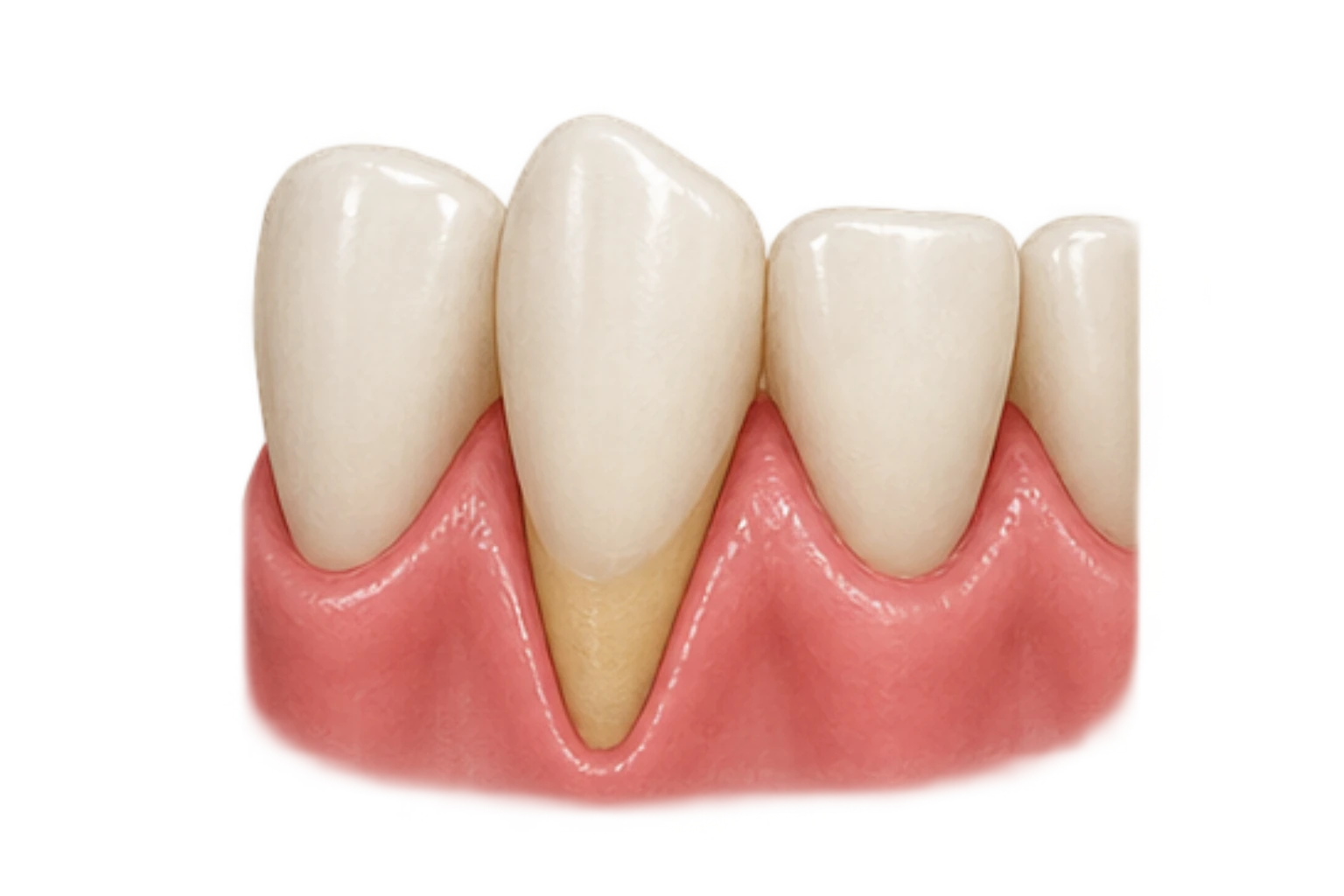
A periodontist is a dentist who focuses on your gums and the bone that anchors your teeth. For receding gums, that means they can measure how far the gum line has moved, work out why it moved, stop it from going further, and when it makes sense, rebuild the lost tissue with a graft.
Here is the part most people want to hear first. Gum tissue that has pulled back does not grow back on its own. The better news is that recession can usually be slowed or stopped, and in many cases it can be repaired. Which route fits you depends on what is causing it.
What receding gums are, and why they matter
Receding gums, also called gum recession, happen when the tissue around a tooth wears away or pulls back and exposes more of the tooth than usual. The part that comes into view is the root, and roots are not covered in enamel the way the crown of the tooth is. That is why an exposed root tends to feel sensitive to cold, sweets or a toothbrush, and why it is more likely to decay.
Recession usually creeps in slowly. Many people only notice it when one tooth looks longer than its neighbor, or when a spot near the gum line starts to ache. Gums that are red and puffy can even hide the problem for a while, because the swelling covers what has been lost.
The cause decides the treatment, so it helps to know the usual suspects:
- Gum disease. Bacteria under the gum line break down the tissue and bone that hold teeth steady. It is the most common reason gums pull back, and it is covered in more detail in our post on what causes gum disease.
- Brushing too hard. A stiff brush, a heavy hand, or a scrubbing motion can wear the gum edge down over years.
- Grinding or clenching. Extra force on the teeth can stress the gum and bone around them, especially at night when you are not aware of it.
- Tobacco. Smoking and other tobacco products are directly linked to receding gums.
- Thin gum tissue. Some people are simply born with a thinner layer of gum, and it can run in families.
- Crowded or tilted teeth. A tooth sitting slightly outside the bone can have very little gum covering it.
Recession also sits on the list of gum disease warning signs, next to bleeding gums, loose teeth and bad breath that will not clear up. Plenty of those signs are easy to brush off, which is why the less obvious symptoms of gum disease are worth a look if you have a recession and something else feels off.
Can receding gums grow back?
Not on their own. Gum tissue does not regenerate the way a scraped knee heals, so once it is gone, it takes professional treatment to bring it back. According to Colgate's oral health guidance, receded gums cannot grow back, but a dentist or periodontist can treat them and help keep them from getting worse.
That second half matters. Dealing with the cause early protects the gum you still have, and it often means the difference between a small, stable change and a bigger repair later.
What happens at a periodontal evaluation
A first visit is mostly about gathering information, and none of it should be rushed. Expect your dentist or periodontist to do some or all of the following:
- Ask about your history. How long you have noticed the change, whether you smoke, whether you grind your teeth, how you brush, and any health conditions that affect your gums.
- Measure the recession. A small, blunt probe is used to record how far the gum has moved back from where it should sit on each tooth. These numbers become your baseline, so changes can be tracked over time.
- Measure the pockets. The same probe checks the space between gum and tooth. Deeper pockets usually point to active gum disease.
- Look at your bite. Worn spots on the teeth can show grinding, and a tooth that takes too much pressure can be part of the story.
- Check the bone. X rays show how much bone surrounds each tooth, which tells the dentist whether the problem is only at the surface.
At the end of this, you should come away knowing three things: why your gums receded, whether it is still happening, and what your realistic options are. If any of that is not clear, ask. A good evaluation leaves you with a plan you understand, not a list of procedures. Our team provides periodontal care in Manteca, and we start with exactly this kind of careful look.
Nonsurgical treatment comes first when gum disease is involved
If bacteria are the reason your gums are pulling back, the first job is getting that infection under control. Grafting tissue onto a gum that is still inflamed and infected would be like painting a wall that is still damp.
Scaling and root planing is the usual starting point. It is a deep cleaning below the gum line that removes plaque and tartar from the root surfaces and smooths them so the gum can reattach more easily. If you want to know what the appointment is like and what it can realistically
achieve, we walk through it in how scaling and root planing can benefit gum health. Sometimes an antibiotic is placed in the pockets to help clear stubborn infection.
After that, periodontal maintenance visits keep bacteria from settling back in. These are not the same as a routine cleaning, and they are often scheduled a little closer together. Skipping them is one of the most common ways treated gum disease comes back.
Habit changes belong in this stage too. Switching to a soft brush, learning a gentler technique, and getting a night guard if you grind can all take pressure off the gum edge. If you are not sure whether your brushing is part of the problem, our post on common tooth brushing mistakes is a good place to check yourself.
Gum grafting: the main way to rebuild lost gum tissue
A gum graft is a procedure in which healthy tissue is moved to the area where the gum has receded, covering the exposed root and thickening the gum so it is better protected. It is the treatment most people picture when they ask what a periodontist can do for receding gums.
The tissue usually comes from one of two places. It can be taken from the roof of your mouth, or from gum next to the area being treated when there is enough to spare. Some grafts use donor tissue instead, which spares you a second surgical site. Which approach suits you depends on how thick your gum is, how much has been lost and where.
Grafting tends to make sense when:
- the root is exposed and the tooth is sensitive or at risk of decay,
- the recession is getting worse over time,
- the gum around the tooth is too thin to protect it,
- or you are bothered by how the tooth looks and the gum disease is under control.
The procedure is done with local anesthetic, so you should not feel pain while it is happening. Afterward, you can expect some soreness, and if tissue was taken from the palate, that spot often feels more tender than the graft site itself. Most people are told to eat soft, cool foods for a while, avoid brushing the area directly until it has healed, and rinse gently as instructed. Your care team will give you specifics, and it is worth following them to the letter. Healing is where a graft succeeds or struggles.
One honest note: a graft repairs the damage, but it does not remove the reason the damage happened. If heavy brushing, grinding or untreated gum disease is still in the picture, the new tissue can recede again. That is why the cause gets dealt with first.
Other options when a graft is not the right fit
Not every case of recession needs surgery, and some are better handled in other ways.
When the recession is mild and stable, the sensible plan may simply be to watch it. Your baseline measurements let the dentist see whether anything is changing from one visit to the next, and sensitivity can often be managed with a desensitizing toothpaste or a professional treatment applied to the root.
If gum disease has left deep pockets that a cleaning cannot reach, a periodontist may recommend pocket reduction surgery. The gum is gently lifted, bacteria and hardened deposits are cleaned out, and the tissue is secured back against the tooth so there is less space for bacteria to hide. Where bone has been lost, regenerative procedures can also be part of advanced gum treatment.
For some people the main concern is how a tooth looks, and a tooth colored material can be used to cover an exposed root surface. That does not restore the gum itself, so it is a cosmetic fix, and it works best when the gum is healthy and stable.
Protecting your gums after treatment
The treatment is half of the work. What you do in the months afterward is the other half.
Brush twice a day with a soft toothbrush and light pressure, angling the bristles toward the gum line without scrubbing. Clean between your teeth every day. If you grind your teeth, wear the night guard you are given, since the habit that wore the gums down is still there when you sleep. If you use tobacco, cutting back or quitting is one of the strongest things you can do for gum healing.
Keep your maintenance visits, too, even when everything feels fine. Gum problems are quiet. Early recession rarely hurts, which is exactly why regular checks catch it before you do. For simple routines that help between visits, take a look at these daily habits for healthier gums.
When to see a periodontist instead of waiting
Mild recession that has not changed in years is one thing. These situations are different, and they are worth booking an appointment for sooner rather than later:
- A tooth looks noticeably longer than it did a few months ago.
- You have sensitivity that keeps getting worse, or a visible notch at the gum line.
- Your gums bleed when you brush or floss, or they look swollen and dark red.
- A tooth feels loose or has started to shift.
- You have persistent bad breath that brushing does not help.
- You see pus or feel tenderness around a tooth.
Waiting rarely makes recession easier to treat. Tissue and bone are far simpler to protect than to rebuild.
Talk to our Manteca team about your gums
If your gum line has changed, we would rather look at it early than late. We will measure what is going on, explain why it happened in plain language, and talk through the options, including whether a specialist referral makes sense for your situation. Call us at (209) 239-5996 or book online.
Frequently asked questions on Receding Gums
Can receding gums be treated without surgery?
Often, yes. When gum disease is the cause, a deep cleaning, better home care and regular maintenance visits can stop the recession from progressing. Surgery, such as a graft, is generally considered when tissue needs to be rebuilt or the root is at risk.
Is gum grafting painful?
The procedure is done under local anesthetic, so you should feel pressure rather than pain. Soreness afterward is normal, particularly where tissue was taken from the palate, and it is usually manageable with the pain relief your dentist recommends.
What is the difference between a periodontist and a regular dentist?
A periodontist has extra training in gum disease and the structures around the teeth, including surgery to treat or repair them. A general dentist handles everyday dental care and often spots gum problems first. Many cases of mild gum disease are managed in a general practice, and the more complex ones are where a specialist comes in.
Why are my gums receding when I brush and floss every day?
Brushing habits are only one cause. Brushing too hard can do it, but so can gum disease, grinding, thin gum tissue, tobacco use or the way your teeth sit in the jaw. A gum evaluation can show which of these applies to you.
Can I stop receding gums from getting worse myself?
You can help. A soft brush, gentle technique, daily cleaning between the teeth and quitting tobacco all support healthy gums. But home care cannot remove hardened tartar below the gum line or tell you why the recession started, so a professional check is still needed.

See Why Patients Choose Manteca Smiles
Hear from our patients about their experiences at our Manteca dental office and why Manteca Smiles is the go-to choice for family and cosmetic dentistry. Our long-standing reputation is built on trust, comfort, and consistently positive outcomes.
Get in Touch with Manteca Smiles
Book your appointment at Manteca Smiles and enjoy trusted, family-friendly dental care in the heart of Manteca.


Monday to Thursday - 8.30 a.m. to 5:00 p.m.
Friday, Saturday and Sunday - Closed




© Manteca Smiles 2026. All Rights Reserved | Privacy Policy | Digital Marketing by Remedo