
Dental Implant vs Dental Bridge: What Are the Key Differences?
Losing a tooth can affect much more than your smile. Missing teeth can make it harder to chew, change the way you speak, and even lead to shifting teeth or bone loss over time. Fortunately, modern dentistry offers several reliable ways to replace missing teeth, with dental implants and dental bridges being two of the most common options.
If you are considering tooth replacement, you may wonder which treatment is right for you. While both dental implants and bridges restore function and appearance, they differ in how they are placed, how long they last, and how they affect your overall oral health.
Understanding these differences can help you make an informed decision. A comprehensive dental examination in Manteca is the best way to determine which option fits your individual needs.
What Is a Dental Implant?
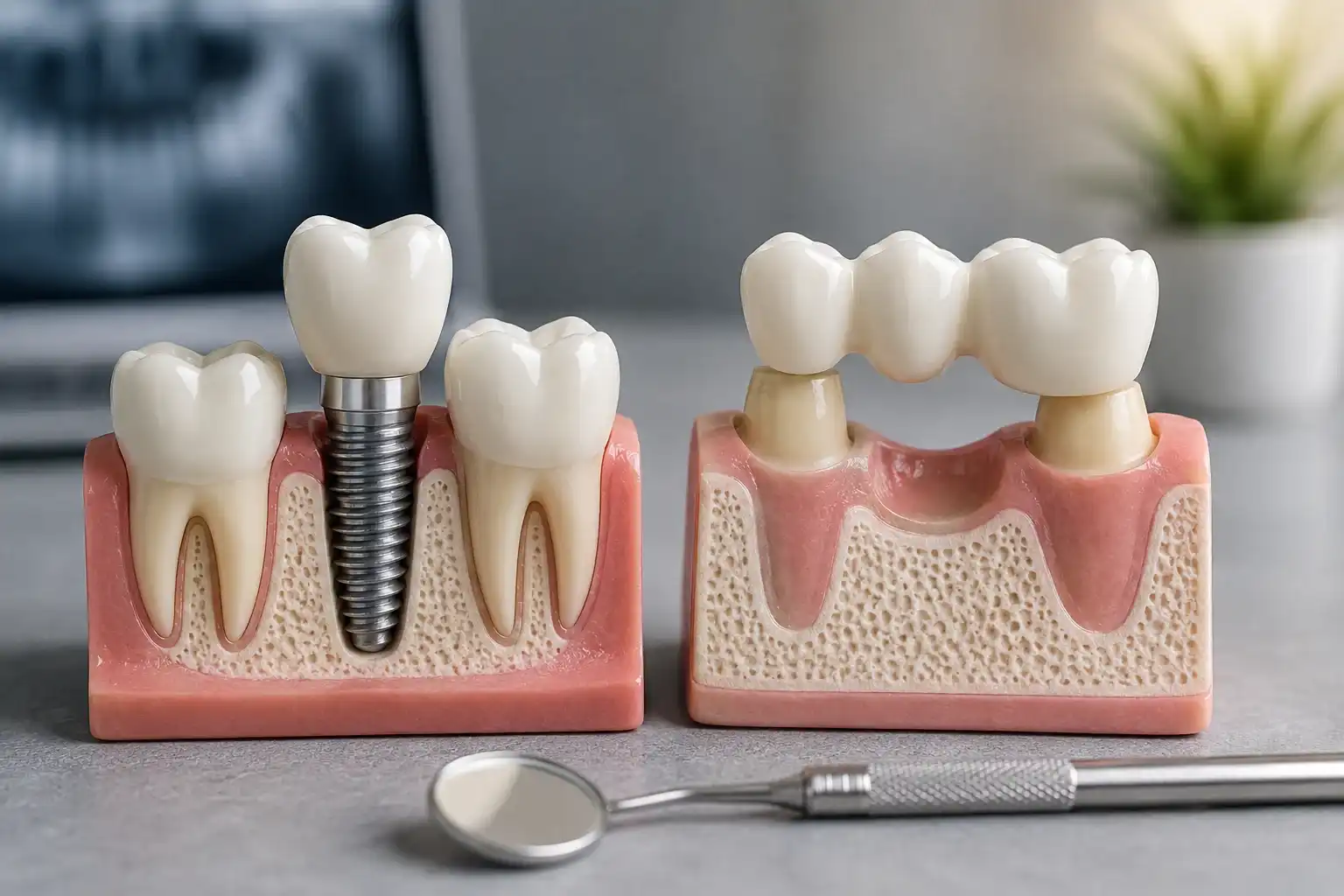
A dental implant is an artificial tooth root, usually made of titanium, that is surgically placed into the jawbone. Over time, the implant fuses with the surrounding bone through a natural process called osseointegration.
Once the implant has healed, a custom-made dental crown is attached to it, creating a replacement tooth that closely resembles the look and function of a natural tooth. Dental implants replace both the missing tooth and its root, making them a premium, stand-alone smile transformation strategy for long-term tooth loss.
What Is a Dental Bridge?
A dental bridge replaces one or more missing teeth by using the neighbouring natural teeth for support.
To place a traditional bridge, the healthy teeth on either side of the gap are prepared so they can support crowns. A replacement tooth, known as a pontic, is attached between these crowns to "bridge" the empty space. Unlike dental implants, bridges do not replace the missing tooth root. In some situations, dental implant bridges may also be recommended when replacing multiple missing teeth.
How They Differ
Although both treatments restore your smile, there are several important differences to consider.
Jawbone Health
One of the biggest advantages of dental implants is that they help preserve the jawbone. When a tooth is lost, the surrounding bone no longer receives stimulation from the tooth root and may gradually shrink over time. Because implants function like natural tooth roots, they help maintain bone density. Dental bridges restore the visible portion of the tooth but do not prevent bone loss beneath the missing tooth.
Impact on Nearby Teeth
Dental implants stand independently without relying on neighbouring teeth. With a traditional dental bridge, the adjacent healthy teeth must be reshaped to support the restoration. Although bridges are highly successful, this process removes a portion of healthy tooth structure. For patients with otherwise healthy surrounding teeth, preserving natural tooth structure is an important reason to choose implants.
Appearance and Function
Both dental implants and bridges are designed to look natural and restore normal chewing ability. Modern dental materials closely match the colour and shape of your surrounding teeth, allowing either option to blend seamlessly with your smile. Many patients find that dental implants feel especially natural because they are securely anchored within the jawbone.
Longevity
Both treatments are durable when properly maintained:
- Dental Bridges: Typically last between 10 and 15 years, though many last longer with excellent oral hygiene and routine dental care.
- Dental Implants: Can last for decades and, in many cases, even a lifetime. While the cosmetic crown attached to the implant may eventually require replacement due to normal wear, the implant screw itself remains stable in the bone.
Treatment Time
A dental bridge generally requires fewer appointments and can often be completed within a few weeks. Dental implants usually involve a longer treatment process because the implant must heal and integrate with the jawbone before the final crown is placed. Depending on your individual situation, treatment may take several months. If you're wondering more about dental implant healing, understanding the recovery timeline can help you prepare for treatment.
Oral Hygiene
Both restorations require good oral hygiene. Dental implants can be brushed and flossed much like natural teeth, making daily care relatively straightforward. Dental bridges also require regular brushing and flossing, but special floss threaders or interdental brushes are recommended to clean beneath the replacement tooth. Maintaining consistent preventive dental care is essential for the long-term success of either treatment. Following proper dental implant care can help maximize the lifespan of your restoration.
Cost Considerations
Dental implants often have a higher initial cost because they involve surgical placement and multiple stages of treatment. Dental bridges are generally less expensive upfront and may be completed more quickly. However, when considering long-term maintenance and replacement needs, many patients find that dental implants provide excellent long-term value.Learning about the cost of dental implants can help you compare your treatment options more effectively.
Which Option Is Right for You?
The best treatment depends on several factors, including:
- Your overall oral health and jawbone density
- The number of missing teeth and health of neighbouring teeth
- Your treatment timeline, budget, and insurance coverage
Patients with sufficient jawbone and good overall health are often excellent candidates for dental implants. Those who are looking for a faster solution or who may not be candidates for implant surgery may benefit from a dental bridge.
Restore Your Smile with Confidence
Replacing a missing tooth is an investment in your oral health, comfort, and confidence. Both dental implants and dental bridges are effective solutions, but understanding their differences can help you choose the option that best supports your long-term smile.
If you are exploring tooth replacement options, schedule a consultation with a trusted dentist in Manteca. Together, you can determine whether a dental implant or dental bridge is the right solution for restoring your smile and improving your quality of life.
FAQs on Dental Implant vs Dental Bridge
Which lasts longer, a dental implant or a dental bridge?
Dental implants generally last longer than dental bridges. With proper care, an implant can remain securely in place for decades, while a dental bridge typically lasts 10 to 15 years before it requires replacement.
Is getting a dental implant more painful than getting a bridge?
Both procedures are performed using local anaesthesia to keep you completely comfortable. Some mild soreness is expected after either treatment, but most patients manage any discomfort easily with recommended medications and return to normal activities within a few days.
Can I get a dental implant if I have been missing a tooth for several years?
Possibly. Even if you have been missing a tooth for a long time, you may still be a candidate for a dental implant. Your provider will evaluate your jawbone, and if necessary, procedures such as bone grafting may be recommended before implant placement.
Does a dental bridge damage healthy teeth?
A traditional dental bridge requires the neighbouring teeth to be permanently reshaped so crowns can support the bridge. Dental implants, on the other hand, do not rely on adjacent teeth and help preserve their natural structure.
Which option looks more natural?
Both dental implants and modern dental bridges are designed to closely resemble natural teeth. However, dental implants often provide the most natural feel because they are anchored directly into the jawbone, functioning just like a natural tooth root.

See Why Patients Choose Manteca Smiles
Hear from our patients about their experiences at our Manteca dental office and why Manteca Smiles is the go-to choice for family and cosmetic dentistry. Our long-standing reputation is built on trust, comfort, and consistently positive outcomes.
Get in Touch with Manteca Smiles
Book your appointment at Manteca Smiles and enjoy trusted, family-friendly dental care in the heart of Manteca.


Monday to Thursday - 8.30 a.m. to 5:00 p.m.
Friday, Saturday and Sunday - Closed




© Manteca Smiles 2026. All Rights Reserved | Privacy Policy | Digital Marketing by Remedo