
Root Canal vs Tooth Extraction: How to Decide What's Right for You
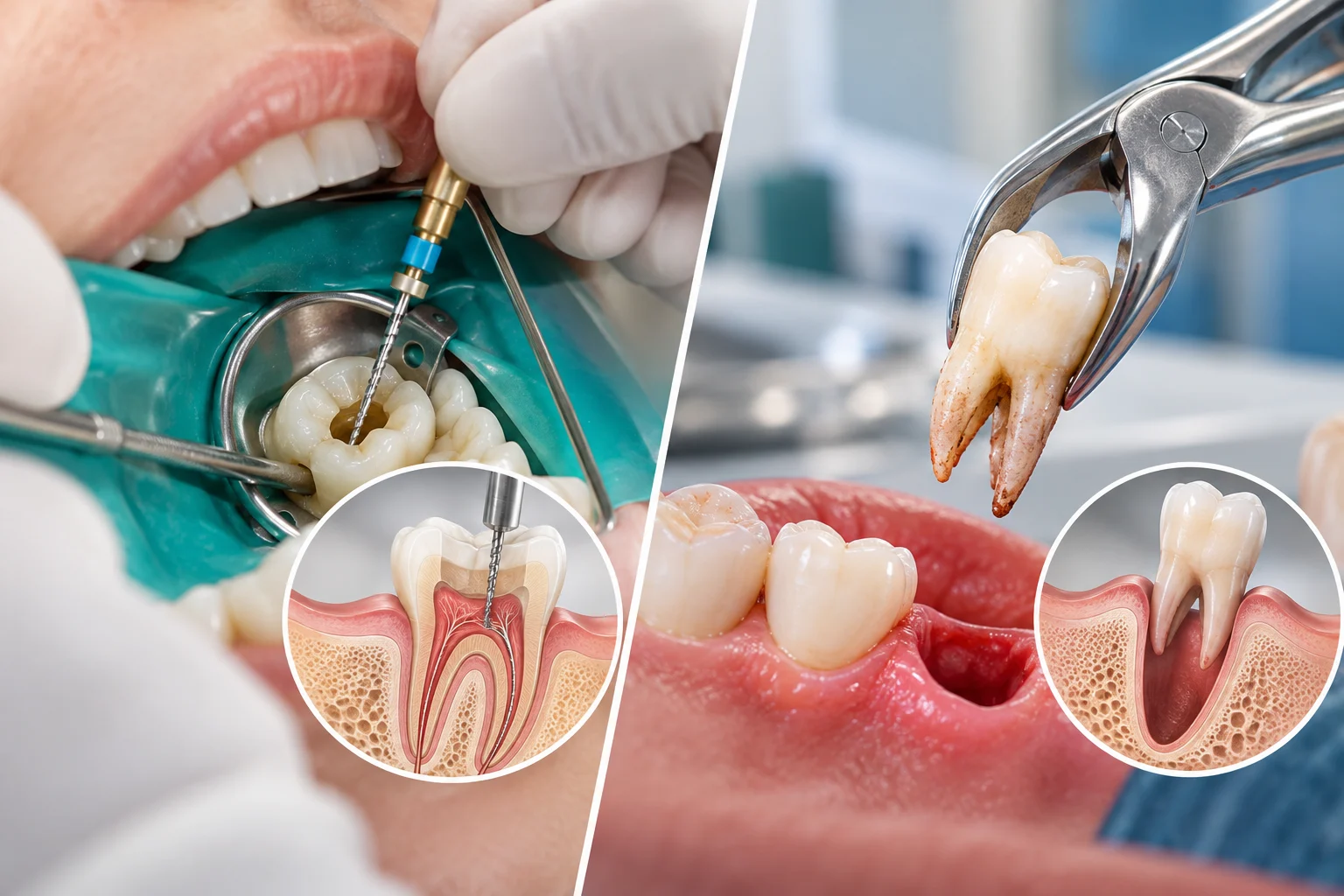
When a tooth is severely damaged, decayed, or infected, your dentist may discuss two possible treatment options - a root canal or tooth extraction. Although both can address a painful or compromised tooth, they involve very different approaches.
A root canal is designed to remove infection from inside the tooth and preserve the natural tooth structure. Extraction, on the other hand, involves removing the tooth when it cannot be predictably restored or when removal is the more appropriate treatment option.
The right choice depends on factors such as the condition of the tooth, the extent of decay or infection, the amount of healthy tooth structure remaining, your overall oral health, and your long-term treatment goals.
What Is a Root Canal?
A root canal is a dental procedure used to treat infection or inflammation inside a tooth.
Inside every tooth is a soft area called the pulp, which contains nerves and blood vessels. Deep decay, cracks, trauma, or repeated dental procedures can damage the pulp and allow bacteria to cause an infection.
During a root canal, your dentist removes the infected or damaged pulp, cleans and disinfects the inside of the tooth, and seals the root canals.
The tooth can then be restored with a filling or, when appropriate, a dental crown to help protect the remaining structure. If you want to understand more about how damaged teeth are repaired, your dentist can also discuss different restorative dental treatments available for your situation.
What Is a Tooth Extraction?
A tooth extraction involves removing a tooth from its socket in the jawbone.
Extraction may be recommended when a tooth is severely damaged or when restoring it would not provide a predictable outcome.
Some reasons a tooth may need to be extracted include:
- Extensive tooth decay
- Severe cracks or fractures
- Advanced gum disease
- Significant loss of tooth structure
- Infection that cannot be adequately treated
- A tooth that cannot be restored with available dental treatments
- Certain orthodontic or wisdom tooth-related situations
Removing a tooth may resolve an immediate problem, but it also creates a missing-tooth space that may need to be addressed later. Your dentist can explain tooth replacement options if replacement is appropriate after extraction.
When Is a Root Canal Usually Considered?
A root canal may be considered when the tooth is damaged or infected but still has enough healthy structure to be restored.
Your dentist may recommend root canal treatment if you have symptoms such as:
- Persistent tooth pain
- Sensitivity to hot or cold that lingers
- Pain when biting or chewing
- Swelling around the tooth
- A dental abscess
- Deep decay reaching the pulp
- A tooth that has experienced significant trauma
However, symptoms alone do not determine whether a root canal is appropriate. Your dentist may use an examination and dental X-rays to evaluate the tooth and surrounding structures.
If the tooth can be adequately cleaned, sealed, and restored, preserving it may be an option.
When Might Tooth Extraction Be Recommended?
Extraction may be considered when the tooth has suffered damage that makes restoration difficult or unlikely to succeed.
For example, a tooth may require extraction if:
- Most of the natural tooth structure has been destroyed
- The tooth has a severe fracture that extends below the gumline
- Advanced periodontal disease has significantly affected the supporting bone
- The tooth cannot be adequately restored
- Previous treatment has failed and retreatment is not appropriate
- The tooth presents a problem that cannot be resolved through restorative treatment
Your dentist will evaluate the individual tooth rather than relying on symptoms alone.
Root Canal vs. Extraction - What Is the Difference?
The main difference is whether the natural tooth can be preserved.
With a root canal, the goal is to remove the infected pulp while keeping the natural tooth in place.
With an extraction, the entire tooth is removed.
A root canal may involve:
- Examination and dental X-rays
- Local anaesthesia
- Accessing the inside of the tooth
- Removing infected or damaged pulp
- Cleaning and disinfecting the canals
- Filling and sealing the canals
- Restoring the tooth
An extraction involves loosening and removing the tooth from its socket. Depending on the situation, additional treatment may be needed afterward to replace the missing tooth.
Is a Root Canal Better Than an Extraction?
There is no single treatment that is appropriate for every patient.
If a tooth can be restored predictably, preserving the natural tooth may be one option. However, if the tooth is too damaged to restore, extraction may be necessary.
Your dentist may consider:
- How much healthy tooth structure remains
- The location of the tooth
- The extent of infection or decay
- The condition of the surrounding gums and bone
- Whether the tooth has a crack or fracture
- Previous dental treatment
- Your overall oral health
- Your treatment goals
- The feasibility of restoring the tooth after treatment
The decision should be based on the condition of the tooth and your individual circumstances rather than choosing a procedure based only on cost or fear.
What Happens If You Choose Extraction?
If a tooth is extracted, you may need to consider how the missing tooth will be replaced.
Depending on your situation, replacement options may include:
- Dental implants
- Dental bridges
- Partial dentures
A missing tooth can affect chewing and may allow nearby teeth to shift into the space. The extent of these effects can vary depending on which tooth is missing and your overall oral health.
If replacement is recommended, your dentist can discuss options such as dental implants for missing teeth and explain what may be appropriate for you.
Can a Root Canal Save a Cracked Tooth?
It depends on the type and extent of the crack.
Some cracked teeth can be treated and restored, while others may have fractures that extend into areas where the tooth cannot be predictably saved.
A dental examination is important because the location and depth of the crack can significantly affect treatment options.
If a tooth has both structural damage and pulp infection, your dentist may need to evaluate both problems before recommending treatment.
What Happens After a Root Canal?
After root canal treatment, the tooth usually needs a final restoration to protect the remaining tooth structure.
Depending on the amount of tooth structure remaining and the location of the tooth, your dentist may recommend a filling, crown, or another restoration.
For teeth that have lost substantial structure, a dental crown after root canal treatment may be considered to help restore function and protect the tooth.
Your dentist will determine the appropriate restoration based on the condition of the treated tooth.
What Happens After a Tooth Extraction?
After an extraction, your dentist will provide instructions to help the extraction site heal.
You may be advised to:
- Avoid disturbing the extraction site
- Follow instructions regarding eating and drinking
- Keep the area clean as directed
- Avoid smoking during the recommended healing period
- Take medications as prescribed or recommended
- Attend follow-up appointments if necessary
Healing time varies depending on the tooth, the complexity of the extraction, and your individual health.
If the tooth needs to be replaced, your dentist can discuss dental implant treatment and other replacement options when appropriate.
Is a Root Canal More Expensive Than an Extraction?
The cost of either treatment varies depending on the tooth and the complexity of the case.
A root canal may involve the root canal procedure as well as a final restoration. An extraction may initially cost less, but replacing the extracted tooth can add additional expenses.
For example, replacing a missing tooth with an implant may involve several stages, including implant placement and a final restoration. If you are comparing treatment options, ask your dentist about the complete cost of dental implant treatment if extraction is recommended.
When comparing costs, consider the complete treatment plan rather than only the initial procedure.
Ask your dentist for a detailed estimate that explains:
- The recommended procedure
- Diagnostic imaging
- The cost of treatment
- Any required restoration
- Additional procedures that may be necessary
- Follow-up care
- Tooth replacement options if extraction is recommended
Can You Avoid a Root Canal or Extraction?
The best way to avoid extensive dental treatment is to address dental problems early.
Regular dental examinations can help identify cavities, cracks, gum disease, and other problems before they become more extensive.
Good daily oral hygiene also plays an important role. Brushing twice a day with fluoride toothpaste, cleaning between your teeth, limiting frequent sugary foods and drinks, and attending recommended dental visits can help support your oral health.
However, not every dental problem can be prevented. If you develop persistent tooth pain, swelling, sensitivity, or other concerning symptoms, schedule an evaluation rather than waiting for the problem to resolve on its own.
What Should You Ask Your Dentist?
If you have been told that you may need a root canal or extraction, ask questions before deciding on treatment.
You can ask:
- Can this tooth be restored?
- How much healthy tooth structure remains?
- Is there an infection?
- Is the tooth cracked or fractured?
- What happens if I delay treatment?
- What are the benefits and limitations of a root canal?
- What would happen if the tooth were extracted?
- Would I need to replace the tooth afterward?
- What would the complete cost of each option be?
- What type of restoration would I need after treatment?
Understanding your options can make it easier to participate in the treatment decision.
Root Canal or Extraction - Which One Is Right for You?
A root canal and tooth extraction are not interchangeable treatments. A root canal aims to treat the inside of a damaged or infected tooth while preserving the natural tooth. Extraction removes the tooth when it cannot be restored or when removal is considered the more appropriate option.
The right choice depends on the condition of your tooth, the surrounding tissues, your overall oral health, and your long-term needs.
If you are experiencing persistent tooth pain or have been told that you may need a root canal or extraction, schedule an examination with your dentist. A thorough evaluation can help determine whether the tooth can be restored and what treatment options are available.
FAQs on Root Canal Vs. Extraction
Q: Is a root canal better than having a tooth extracted?
A: There is no single answer for every patient. If a tooth can be predictably restored, root canal treatment may be an option for preserving the natural tooth. If the tooth is too damaged to restore, extraction may be recommended.
Q: How do I know if I need a root canal or extraction?
A: Your dentist will evaluate the tooth, surrounding tissues, symptoms, and dental X-rays to determine whether the tooth can be restored. The extent of decay, infection, cracks, and remaining tooth structure can all influence the recommendation.
Q: Can a tooth be saved instead of extracted?
A: In some cases, yes. If enough healthy tooth structure remains and the tooth can be adequately treated and restored, root canal treatment may allow the natural tooth to be preserved. However, severely damaged teeth may not be restorable.
Q: What happens if I extract a tooth instead of getting a root canal?
A: After an extraction, you may need to consider replacing the missing tooth depending on its location and your oral health. Options may include a dental implant, bridge, or partial denture.
Q: Is a root canal more expensive than an extraction?
A: Costs vary depending on the complexity of treatment and the restoration required. While extraction may have a lower initial cost, replacing the missing tooth can involve additional treatment and expenses.
Q: Can an infected tooth always be treated with a root canal?
A: No. A root canal may be possible when the tooth has enough healthy structure and can be restored. If the tooth has extensive structural damage, certain fractures, or other problems that prevent predictable restoration, extraction may be recommended.

See Why Patients Choose Manteca Smiles
Hear from our patients about their experiences at our Manteca dental office and why Manteca Smiles is the go-to choice for family and cosmetic dentistry. Our long-standing reputation is built on trust, comfort, and consistently positive outcomes.
Get in Touch with Manteca Smiles
Book your appointment at Manteca Smiles and enjoy trusted, family-friendly dental care in the heart of Manteca.


Monday to Thursday - 8.30 a.m. to 5:00 p.m.
Friday, Saturday and Sunday - Closed




© Manteca Smiles 2026. All Rights Reserved | Privacy Policy | Digital Marketing by Remedo