Dental Crowns and MRI Scans: What to Tell Your Imaging Team
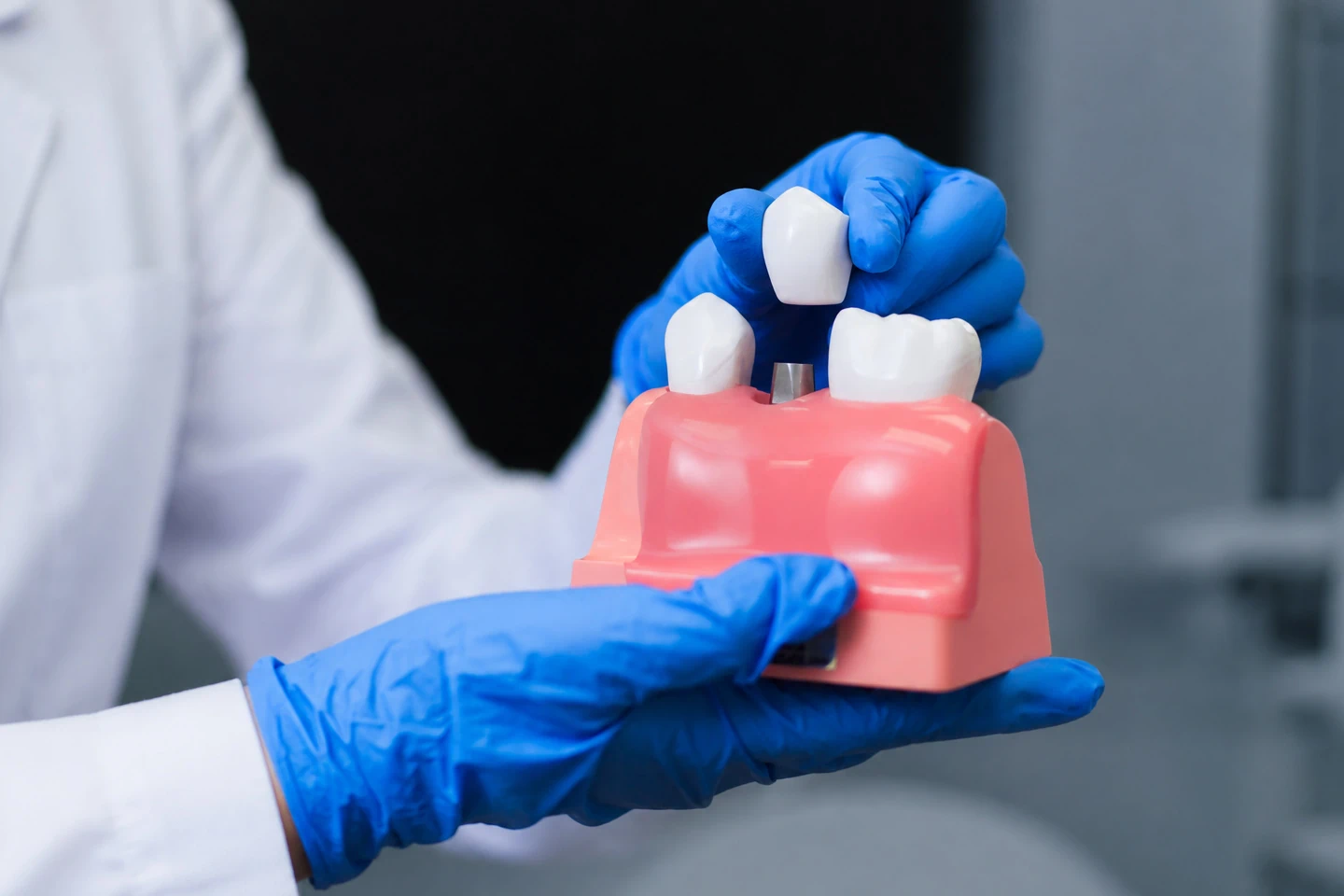
Yes, in most cases you can have an MRI with dental crowns. Crowns made of porcelain, ceramic or zirconia are generally not a concern. Crowns that contain metal are more likely to blur the picture, mostly when the scan is of your head or neck, and your imaging team needs to know about them before the scan starts.
If you have an MRI coming up and a mouth full of dental work, a little worry is normal. MRI machines use a very strong magnet, and the warnings you hear about metal can sound alarming. The reality for most people with crowns is far calmer than that, though the details are worth understanding so you can answer the technologist's questions with confidence.
Why people worry about crowns and MRI scans
An MRI scanner does not use X rays or ionizing radiation. It uses a powerful magnetic field and radio waves to build images of the soft tissues inside the body. Anything metal that sits in the field can react to it, which is why you are asked to remove jewelry, watches and belt buckles, and why you answer a long safety questionnaire before a scan.
Dental work falls into a gray area in people's minds because crowns are fixed in your mouth and cannot simply be taken off at the door. So the question becomes whether they are a risk to you, or a problem for the pictures. Those are two separate issues, and the answers are different.
What an MRI can do to dental materials
According to a published review in Case Reports in Dentistry, the effects of dental materials in an MRI scanner fall into three groups: heating caused by radio frequency energy, forces that can pull or move a magnetic object, and image artifacts, which are distortions in the picture.
For crowns, the one that comes up most often is the third. An image artifact is a dark patch, bright area or warped section in the scan around a piece of metal. It can make the part of the body nearest the crown hard for the radiologist to read, and in rare cases it can make an image unusable for that area.
The first two are less of a worry for the typical crown that is firmly cemented in the mouth, though the same review does mention a case in which a crown came loose during a scan. That is uncommon, and it is a good reason to tell the imaging team if one of your crowns already feels loose. We come back to that below.
Crown materials and what they mean for a scan
What your crown is made of matters more than the fact that you have one. At Manteca Smiles, we offer crowns in three main types, and each behaves a little differently around an MRI.
- Porcelain or ceramic: tooth colored, with no metal inside. Generally causes little or no distortion in an MRI.
- Zirconia: a very strong ceramic material. Generally causes little or no distortion in an MRI.
- Metal or porcelain fused to metal: a metal base, sometimes covered with porcelain. The effect depends on the metal, and some alloys can distort images, especially near the mouth.
Research backs this up. In a published study using a cadaver skull, resin, ceramic, zirconia and precious metal ceramic crowns barely produced artifacts, while crowns with pure titanium or nonprecious metal ceramic created significant ones. Other published work on dental alloys points the same way: the type of metal makes a real difference to how much a scan is affected.
It helps to know what your own crowns are made of, and our post on what dental crowns are made of covers the common materials in more detail. If you cannot remember, your dental records usually say. You can also call our office and we can look it up for you.
Why the part of your body being scanned matters
Image distortion from a crown tends to stay close to the crown. That is the main reason the scan location is so important.
If you are having your knee, hip, abdomen or lower back scanned, dental work is very unlikely to affect the picture at all, because it is far from the area of interest. If the scan covers your head, brain, sinuses, jaw, neck or upper spine, the metal in your mouth is closer to the area being studied, so the chance of distortion goes up.
That does not mean the scan cannot go ahead. It means the radiologist should know what is in your mouth, so they can choose the right settings and interpret the images with that in mind. In some cases they can adjust the technique to reduce the effect of the metal.
Implants, braces, fillings and other dental work
Crowns are rarely the only dental work in a mouth, and it helps to mention the rest too.
- Dental implants. Implants are usually made of titanium, and in laboratory studies titanium implants have created an area of signal loss in the images right around them. Implants themselves are not generally considered a safety risk in an MRI, and if you are wondering about their safety more broadly, we answer that in our post on whether dental implants are safe.
- Braces and orthodontic wires. Orthodontic brackets often contain metals that react more strongly to a magnetic field. Tell the team if you have them, as they can cause larger distortions than a single crown.
- Fillings. Silver colored amalgam fillings and tooth colored fillings are both common, and they are generally less of a concern than larger metal pieces. If you are not sure what you have, it helps to understand the difference between fillings and crowns, which we explain in how your dentist decides between a crown and a filling.
- Removable dentures and partials. These may contain metal clasps and are simply taken out before the scan.
- Bridges and permanent retainers. These are fixed in place, so mention them to the team in the same way as a crown.
What it can feel like during the scan
Most people with dental work feel nothing at all during an MRI. The scanner is loud and you have to lie still, and that is usually the hardest part. Rarely, a person notices a mild warm or tingling feeling near a piece of metal. If that happens, say so right away. The technologist can talk to you through the intercom and can pause or stop the scan at any point, so there is no need to tough it out.
Metal crowns in children
Parents often ask about this because preformed metal crowns, commonly called stainless steel crowns, are widely used on children's teeth. A scoping review published in a peer reviewed journal looked for evidence on how they affect scan quality in children and found no studies in living patients that settled the question for head and neck imaging. Its conclusion was that decisions should be made case by case. In practice, that means telling the imaging team about any metal crowns your child has and letting the radiologist decide how to approach the scan.
What if my crown is old, or a temporary one?
An older crown is the case where people feel least sure, because the alloy may be unknown. If you have crowns that are many years old, it is a good idea to find out what they are made of before the appointment. Dental offices keep records, and a quick call is often enough.
Temporary crowns are usually made of acrylic or a similar material, and they are placed while a permanent crown is being made. They are generally not a problem in an MRI, but they are also less firmly attached than a permanent crown. If you have one in place, let the imaging team know.
What to tell the imaging team before your MRI
You do not need to turn this into a project. A short list is enough:
- That you have dental crowns, and roughly how many.
- What they are made of, if you know.
- Whether you have implants, braces, bridges or any other fixed dental work.
- Whether any crown feels loose, sensitive or cracked.
- Which part of your body is being scanned, if it is the head, neck or jaw.
The safety form you fill in will usually ask about metal in your body, so put dental work down on it. If you are unsure what to write, ask the technologist. They deal with this question all the time.
Do not remove a crown just for a scan
You should not need to have a healthy crown taken off for an MRI, and doing so would mean paying again to have a new one made and fitted. If you are curious how much that would involve, our post on what a crown costs in Manteca breaks it down. The sensible approach is to tell the imaging team, let the radiologist decide whether the metal will interfere, and only look at other options if it does.
The exception is a crown that is already loose, cracked or damaged. That is worth fixing before the scan, since a crown that is failing can come off at an awkward time. If one comes loose, our post on what to do during a dental emergency walks you through the first steps, and we can see you quickly.
Questions about your crowns? We can help.
If you want to know what your crowns are made of, or you would like us to check that they are in good condition before a scan, our team is happy to help. A routine dental exam is a good time to look at older work. You can also read more about dental crowns in Manteca. Call us at (209) 239-5996 or book online, and we will see you in Manteca.
Frequently asked questions on Dental Crowns and MRI Scans
Can you have an MRI with a porcelain or zirconia crown?
Generally, yes. These materials contain no metal that reacts to the magnetic field, and studies show they cause little or no image distortion. You should still mention them on your safety form.
Can you have an MRI with metal crowns?
In most cases, yes. The main concern is image quality rather than safety, and it matters most when the scan is of the head or neck. Tell your imaging team, and they can decide whether any adjustments are needed.
Can a crown fall out or heat up during an MRI?
It is uncommon. A firmly cemented crown normally stays put, although there are rare case reports of one coming loose. If you feel warmth or discomfort in your mouth during a scan, tell the technologist right away, since they can stop at any time.
Will my dentist need to do anything before my MRI?
Usually not. If you want to confirm what your crowns are made of, or if one feels loose, give us a call. A quick check beforehand means there are no surprises.
Is a dental X ray different from an MRI for crowns?
Yes. A dental X ray uses a small dose of radiation to take pictures of your teeth, and crowns do not cause the same kind of problem there. An MRI works on a different principle, which is why metal matters in a different way.

See Why Patients Choose Manteca Smiles
Hear from our patients about their experiences at our Manteca dental office and why Manteca Smiles is the go-to choice for family and cosmetic dentistry. Our long-standing reputation is built on trust, comfort, and consistently positive outcomes.
Get in Touch with Manteca Smiles
Book your appointment at Manteca Smiles and enjoy trusted, family-friendly dental care in the heart of Manteca.


Monday to Thursday - 8.30 a.m. to 5:00 p.m.
Friday, Saturday and Sunday - Closed



© Manteca Smiles 2026. All Rights Reserved | Privacy Policy | Digital Marketing by Remedo