
Closing the Gap Between Your Teeth: Which Option Fits?
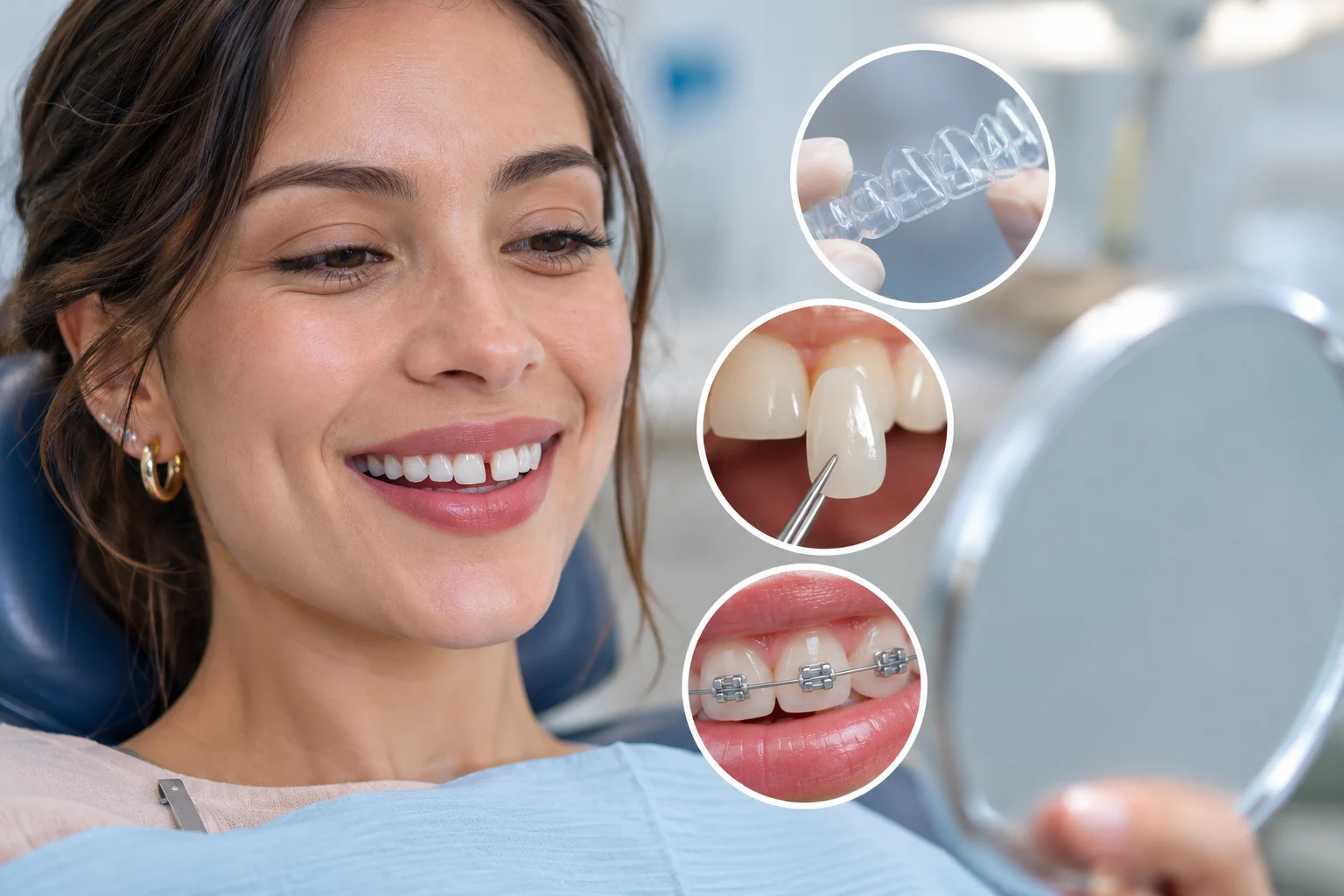
The main treatments for gapped teeth are clear aligners, braces, dental bonding, porcelain veneers, and replacing a missing tooth when the gap comes from a space that should be filled. The right one depends on how big the gap is, what caused it, and whether your gums and bite are healthy.
That last part is where many articles skip ahead. A gap is not always only a cosmetic matter, and the fix that works beautifully for one person can be the wrong move for another. A small space between the front teeth is a different problem from a gap that appeared recently, or one that keeps widening.
Why gaps form between teeth
A gap between two teeth is called a diastema. It can show up between any two teeth, but it is most noticeable between the upper front ones. There is rarely a single reason, and often a few factors are working together.
- Tooth and jaw size. If your teeth are small for your jaw, or your jaw is on the wider side, there is simply extra room and the teeth spread out.
- A low frenum. The frenum is the small fold of tissue that connects your upper lip to your gum. When it attaches low and thick, it can sit between the front teeth and hold them apart. This is the most common cause of a gap between the upper front teeth.
- Missing or undersized teeth. A tooth that never developed, or one that is smaller than usual, leaves space behind.
- Gum disease. When the gum and bone that support the teeth break down, teeth can loosen and drift apart.
- Habits. Thumb sucking, or a tongue that pushes against the front teeth when you swallow, can move the teeth gradually over time.
- Family traits. Gaps often run in families, so you may be looking at a feature you inherited.
The gum disease point deserves attention. According to WebMD, gum disease can damage the tissue and bone that support the teeth and cause gaps to form. If a gap is new, changing, or comes with bleeding or tender gums, it is worth having checked before anything is closed. Closing a gap over teeth that are loose from gum disease is not a fix, because the underlying problem keeps going.
Do you need to close the gap at all?
Not necessarily. Many gaps are harmless, and plenty of people like theirs. Health authorities such as Better Health Victoria note that gapped teeth can often be left alone if they do not cause problems or bother the person who has them.
Treatment starts to make sense when:
- the gap bothers you when you smile, speak or look in the mirror,
- food keeps getting trapped in the space,
- the gap is getting wider,
- or the gap is linked to gum disease, a missing tooth, or a bite problem.
This is your decision. A good dentist will lay out what is possible without pushing you toward more than you want.
Matching the fix to the gap
Here is a starting point, not a prescription. Your dentist will look at your teeth, gums and bite before recommending anything.
- A small space between two teeth, with healthy gums: bonding or clear aligners. Bonding closes it in one visit, and aligners move the teeth together without adding material.
- Several small spaces across the smile: clear aligners. They can close gaps across the whole arch and improve the overall alignment at once.
- A wider gap, or a bite that does not fit together well: braces or aligners, sometimes with a restoration. Moving teeth carefully into the right position often matters more than covering the space.
- Small or oddly shaped teeth: veneers or bonding. Adding to the tooth width closes the space without moving the teeth much.
- A gap from a missing tooth: a dental implant or bridge. The space needs to be filled with a replacement tooth to keep the others stable.
- A gap held open by a low frenum: frenum treatment, then aligners or braces. If the tissue stays in place, the teeth can drift back apart.
- A gap caused by gum disease: gum treatment first. The teeth need stable support before they are moved or covered.
Clear aligners
Clear aligners are a series of custom trays that move your teeth a little at a time. They are removable, they are discreet, and they work well for gaps that are small to moderate, particularly when you also want the rest of the teeth straightened.
At Manteca Smiles, we offer Invisalign and other advanced aligners for teens and adults. Treatment starts with a consultation and digital scans, which are used to plan the movement of your teeth. You wear each set of trays for about two weeks before moving on to the next, for 20 to 22 hours a day, taking them out only to eat and clean. That daily commitment is what makes aligners work, so it is worth being realistic about it before you start.
Not everyone is a candidate, and the answer depends on the size of the gap and the health of the teeth and gums. Our post on who is a good candidate for Invisalign goes through what we look at. If you would like to see how the process works from the start, have a look at our clear aligner treatment in Manteca.
Braces
Traditional braces are fixed to the teeth and use wires and gentle pressure to pull them together. They tend to be the choice for larger spaces, more complicated bite problems, or cases where the teeth need more control than aligners can give.
They are less discreet, and they need more care around food and cleaning, but they are very effective, and for some situations they are the better tool. If you are deciding between the two, our comparison of Invisalign and braces for adults covers the trade offs in plain terms.
Orthodontic treatment is also available at our office, so you can compare both routes in one conversation.
Dental bonding
Bonding uses a tooth colored resin that is placed on the side of a tooth, shaped, and hardened with a light so that it widens the tooth and closes the space. It is usually done in a single visit, and it often needs little or no drilling.
It is a good fit for a small gap between two teeth. The trade offs are that resin can stain over time and can chip, and it does not last as long as a veneer. Healthline notes that bonding may need to be redone every 5 to 10 years. It is also a good option if you want a lower commitment, since it can be adjusted or redone later.
Porcelain veneers
A veneer is a thin shell, usually porcelain, that bonds to the front of a tooth. Used on teeth beside a gap, veneers can make each tooth slightly wider so that the space closes, and they can improve the shape and color of the teeth at the same time.
Veneers usually involve reshaping a small amount of enamel, which means the decision is harder to undo. They are well suited to people who want a complete change in how their smile looks, not only one gap closed. If you are weighing veneers against other cosmetic options, our post on veneers, bonding or crowns explains how the three differ. Our cosmetic dentistry team can talk through what would work for your teeth.
When the gap comes from a missing tooth
If a tooth was lost or never grew in, closing the space by moving the neighbors is sometimes possible, but often it is better to replace the tooth. A missing tooth lets the teeth beside it tilt into the empty space, and the bone underneath can slowly shrink where there is no root to support it.
The two common replacements are an implant, which stands in for the root and carries a crown, and a bridge, which uses the neighboring teeth as anchors. Each has advantages, and our post on dental implants versus bridges lays them out side by side.
What about the frenum?
If a low frenum is holding the front teeth apart, closing the space with aligners or braces may not last unless the tissue is dealt with too. In some cases the dentist may suggest a minor procedure to release or reduce the frenum, sometimes before tooth movement and sometimes during it. Your dentist can tell you whether this applies to you, and whether a referral to a specialist would be part of the plan.
Keeping the gap closed afterward
Teeth have a habit of drifting back toward where they started, so a retainer is part of almost every orthodontic result. Wearing it as directed is what keeps the space closed in the long run. If you ever wonder how much a retainer can do on its own, our post on whether retainers can realign your teeth answers that.
The same applies to bonding and veneers. They close the space, but they do not change the habits or the tissue that may have caused the gap, so the cause still deserves attention.
A word about DIY fixes
You may come across moldable plastic fillers or rubber bands advertised for closing gaps at home. These are not a safe replacement for professional care. Moving teeth without a dentist watching the roots, gums and bone can damage them, and rubber bands in particular can slip below the gum line. If you are curious about a gap, a consultation costs far less than repairing the damage from a home attempt.
How to choose, and what to ask at your consultation
A few questions will help you get more from the appointment:
- What is causing my gap, and is my gum health fine to treat it?
- Which options would you consider for my teeth, and why?
- How long will each one take, and how many visits are needed?
- What will I need to do at home to make it work?
- Will I need a retainer afterward, and for how long?
- What happens if the gap starts to return?
Ask for a clear treatment plan that you can take home and think about. You should never feel rushed into a decision.
Book a consultation in Manteca
If a gap has been on your mind, the easiest way to know your options is to have someone look at your teeth. We will check the gums, talk through what is causing the space, and explain which treatments fit, along with what each one involves. Call (209) 239-5996 or book online.
Frequently asked questions on Treatment for Gapped Teeth
What is the fastest way to close a gap between teeth?
Dental bonding is usually the quickest, since it can often be done in one visit. It suits smaller gaps. Larger gaps, or gaps across several teeth, usually need aligners, braces or veneers.
Can Invisalign close a gap between front teeth?
Often it can. Aligners are commonly used for gaps, especially small to moderate ones. Your dentist will check the size of the gap, your gums and your bite to see if you are a suitable candidate.
Will my gap come back after treatment?
It can if the cause is not addressed. A retainer helps hold teeth in place after aligners or braces, and a low frenum or a tongue thrust habit can pull the teeth apart again if left alone.
Are gaps between teeth bad for your health?
Not by themselves. Many are harmless. The exception is when the gap is a sign of gum disease or a missing tooth, or if food gets trapped and is hard to clean.
Is it too late for an adult to fix a gap?
No. Adults of all ages can have gaps treated with aligners, braces, bonding or veneers, as long as the gums and the supporting bone are healthy.

See Why Patients Choose Manteca Smiles
Hear from our patients about their experiences at our Manteca dental office and why Manteca Smiles is the go-to choice for family and cosmetic dentistry. Our long-standing reputation is built on trust, comfort, and consistently positive outcomes.
Get in Touch with Manteca Smiles
Book your appointment at Manteca Smiles and enjoy trusted, family-friendly dental care in the heart of Manteca.


Monday to Thursday - 8.30 a.m. to 5:00 p.m.
Friday, Saturday and Sunday - Closed



© Manteca Smiles 2026. All Rights Reserved | Privacy Policy | Digital Marketing by Remedo